Bed bug thermal and contact eradication provides targeted intervention for residential infestations without coating personal living spaces in airborne synthetic residues. Sustained ambient heat between 120°F and 135°F…
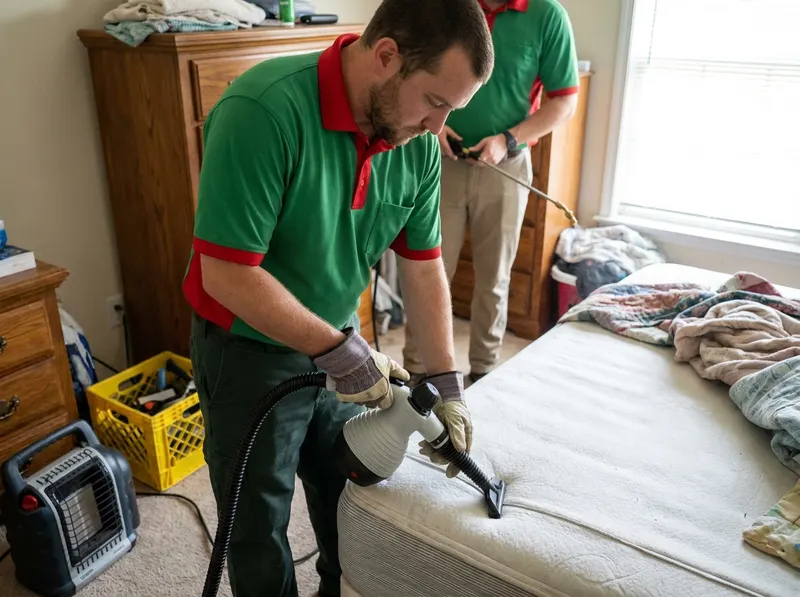
Bed bug thermal and contact eradication provides targeted intervention for residential infestations without coating personal living spaces in airborne synthetic residues. Sustained ambient heat between 120°F and 135°F penetrates deep mattress seams, tufted furniture, and subflooring where manual sprays fail to reach, neutralizing all developmental stages from instars to unhatched eggs in a single day. A targeted contact application follows the heat cycle, treating electrical faceplates and interior perimeter margins to catch any stragglers attempting to flee toward cooler wall cavities. This dual-action protocol resolves active nocturnal biting hazards while preserving home sanctuary conditions and family wellness.
Older architectural layouts in Fisher Park, Westerwood, and Lindley Park frequently harbor original hardwood flooring, radiator heating panels, and plaster wall voids that allow bed bugs to disperse between rooms undetected. In newer constructions across Adams Farm and Sedgefield, central ductwork and insulated subflooring present similar migration routes during early-stage infestations. If live insect activity is limited to a single non-upholstered item, localized contact treatment serves adequately; however, if nocturnal bites, spotting, or molted exoskeletons appear across multiple sleeping areas, full-room thermal heating becomes necessary to prevent recurring dispersal.
1. Initial assessment: A technician conducts a physical inspection of mattress seams, headboards, and perimeter carpet tack strips to map colony density.
2. Space prep: Residents relocate vinyl records, prescription medications, aerosol canisters, and pets away from the designated treatment footprint.
3. Thermal execution: Industrial-grade heating units elevate the ambient indoor temperature to a lethal target of 122°F for a minimum of 4 continuous hours.
4. Contact barrier: Technicians administer low-toxicity, pet-safe non-repellent botanical or contact compounds into critical egress pathways to establish long-term exclusion.
Every job gets a firm, written price after a free on-site visit.
Tell us about your bed bug thermal and contact eradication job in Greensboro and we'll send a clear, written quote, usually the same day.
 CleanNest Pest Management